Most homes aren't designed for what today's hurricanes can actually do. Here's what genuine storm resilience looks like, from the ground up.
TL;DR: Most homes aren't built to withstand a serious hurricane. In 2024, the U.S. hurricane season inflicted over $124 billion in losses, yet the gap between a code-compliant home and a genuinely storm-resilient one remains enormous. True hurricane resistance starts at the design phase: in the walls, the roof, the glazing, and the way it all connects. This post covers what actually works, and why the best time to build for a hurricane is before you need to.
The 2024 Atlantic hurricane season was one of the costliest on record. NOAA confirmed 27 separate billion-dollar weather disasters that year alone, with the three most expensive all being hurricanes. Helene, Milton, and Beryl combined to cause catastrophic losses across the Southeast and Gulf Coast.
And yet, across the same region, some homes survived perfectly intact while their neighbors were levelled. The difference wasn't luck. It was how those homes were built.
If you're planning a custom home in a hurricane-exposed area, whether that's coastal Florida, the Hamptons, or anywhere else in the Atlantic or Gulf Coast corridor, understanding what genuine storm resilience looks like is one of the most important decisions you'll make.
What Makes a Home Truly Hurricane-Resistant?
A hurricane-resistant home is one engineered to withstand the combined forces of extreme wind, wind-driven debris, and flooding. True resilience means the structure stays intact, the building envelope stays sealed, and the home can be reoccupied with minimal repairs after a major storm.
There are three distinct threats a hurricane delivers. High winds create both lateral pressure and upward uplift on roofs and walls. Airborne debris at 100 mph or more punctures standard construction as if it weren't there. Storm surge and flooding then attack the structure from below. A genuinely hurricane-resistant home is designed to address all three simultaneously, not just the one your building code focuses on.
Meeting code is the floor, not the ceiling. Codes reflect the minimum standard a home must survive, not the standard it should be built to. As we've written about when designing for a changing climate, the storms being built against today are less extreme than the ones coming in ten years.
Why Most Homes Fail in a Hurricane
Wood-frame construction, still the default for residential building in the U.S., has well-documented vulnerabilities in high-wind events. The fundamental problem is what engineers call the continuous load path: the unbroken chain of connections from the roof to the walls to the foundation that allows wind forces to travel safely to the ground.
In a typical stick-built home, that chain has multiple weak points. The most common failure mode is the roof-to-wall connection. When wind gets under a roof overhang, the uplift forces can peel the entire roof structure free from the walls. A FEMA analysis after Hurricane Ian found that homes with properly engineered hip roofs experienced significantly less damage, because their geometry resists uplift rather than catching wind like a sail.
The second common failure is the building envelope breach. Once a window or door fails, internal pressure spikes rapidly, dramatically increasing the forces trying to push the roof off from the inside. This is a cascade failure: one breach leads to the next until the structure can no longer hold together.
Standard code may require homes to withstand winds of 130 to 150 mph in many coastal areas. But recent storms have routinely exceeded those thresholds. Building to code means building to the minimum, and minimum isn't a strategy for longevity.
What Are the Best Materials for Hurricane-Resistant Construction?
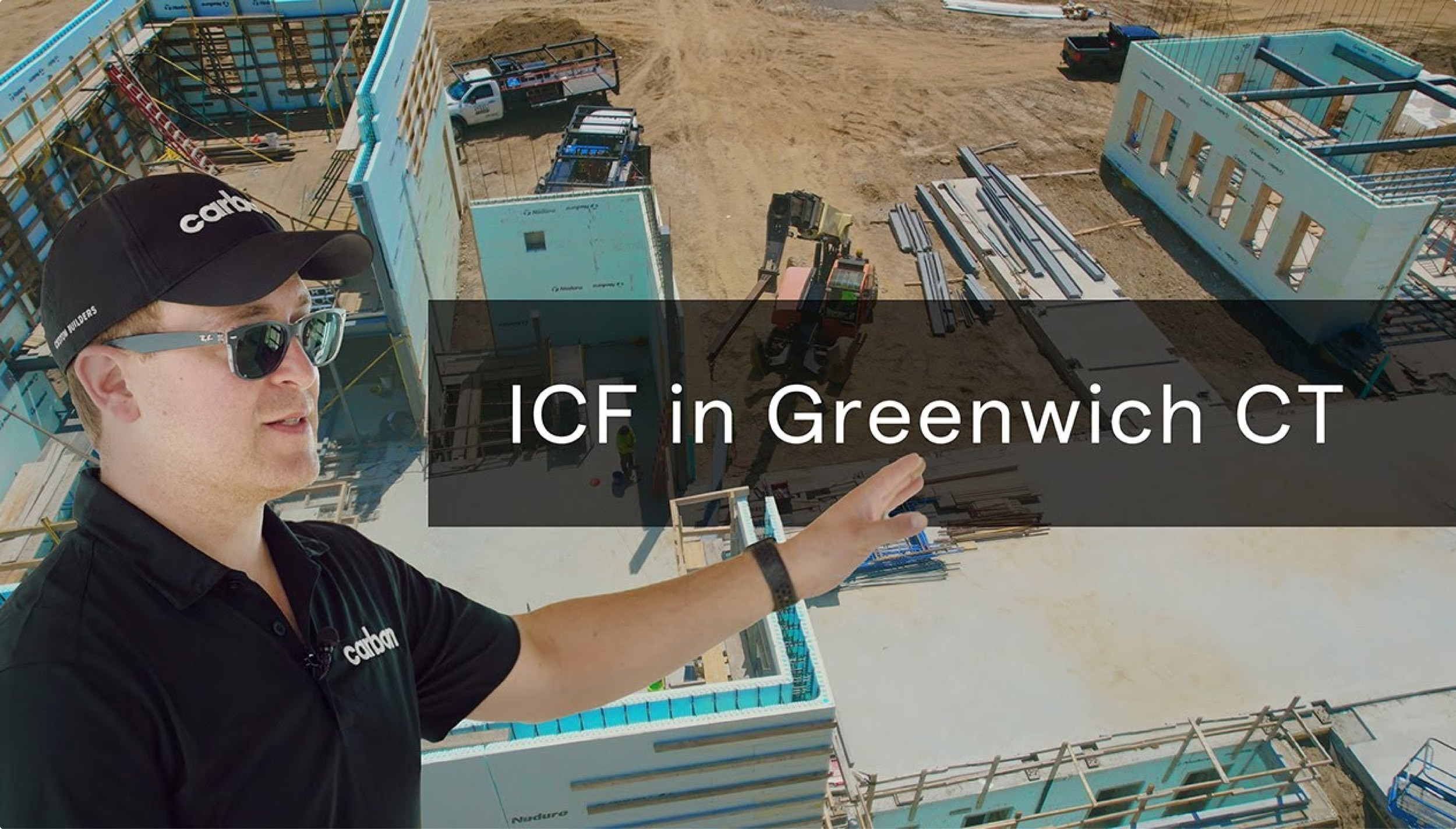
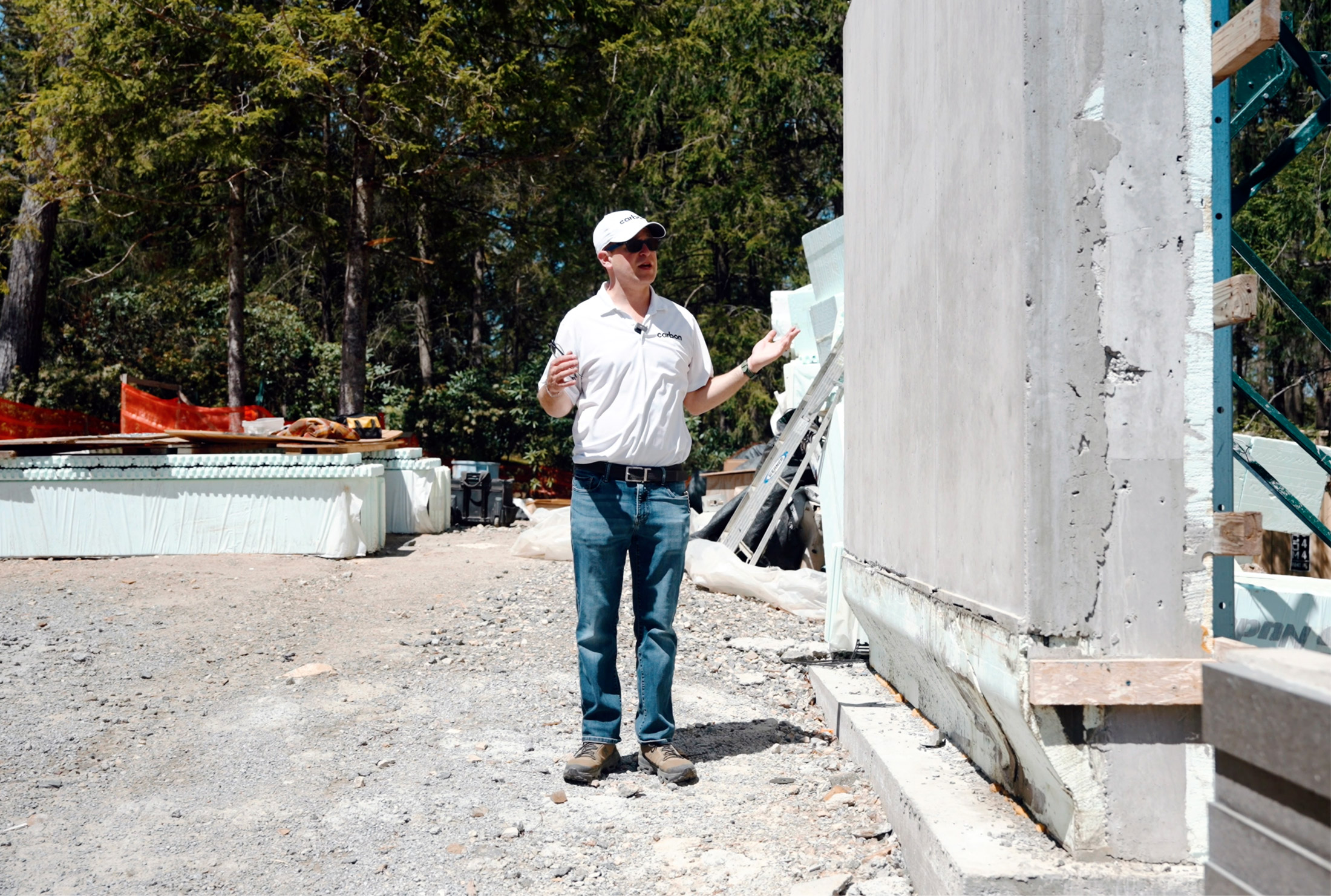
Insulated Concrete Forms (ICF) are the strongest wall system available for residential construction. An ICF wall is a reinforced concrete core surrounded by continuous foam insulation: a monolithic structure with no joints, gaps, or weak points that wind can exploit.
ICF walls resist wind speeds in excess of 200 mph, far beyond what wood-frame construction can achieve. The Portland Cement Association has documented that ICF walls provide greater structural capacity and stiffness to resist in-plane shear forces than either steel or wood walls. At Texas Tech University, debris impact testing showed that a 15-pound 2x4 fired at 100 mph, simulating conditions in a 250 mph storm, penetrated the foam of an ICF wall but was completely stopped by the concrete core.
The real-world record speaks for itself. When Hurricane Michael made landfall at Mexico Beach, Florida in 2018 with 155 mph sustained winds, one beachfront home stood virtually undamaged while nearly everything around it was destroyed. It was built with ICF. The Sand Palace, as it came to be known, was designed to withstand winds of up to 250 mph, more than double what local code required. During Hurricane Katrina, 30 homes built with ICF or to the 2000 hurricane code in one Mississippi subdivision survived winds of 175 to 225 mph, while framed homes in neighboring streets were demolished and brick homes were shifted off their foundations.
At Carbon, why we build with ICF comes down to a simple principle: we don't build to the minimum. We build to what the home will actually need to face over its lifetime.
How Roof Design Affects Hurricane Survival
A hip roof, where all four sides slope downward to the walls, outperforms a gable roof in high winds because its geometry works with aerodynamics rather than against them. Where a gable roof has flat vertical ends that catch wind and create intense, focused pressure, a hip roof deflects wind from all directions.
Insurance companies recognise this: many offer discounts of up to 32% for homes with hip roofs in hurricane-prone areas. Post-storm data shows that gable roofs generate 40 to 60% more wind damage claims than hip roofs. Wind tunnel research at NJIT found that a square-plan home with a four-sided hip roof performed best of any tested configuration under extreme wind loads.
Beyond shape, the details matter enormously. Roof overhangs should be kept under 20 to 30 inches, as longer overhangs dramatically increase uplift vulnerability. Hurricane straps and clips, the metal connectors that mechanically fasten the roof structure to the walls, are non-negotiable in any storm-exposed build. A sealed roof deck, where all sheathing joints are taped and waterproofed, prevents catastrophic water intrusion even if individual shingles are lost.
The roof is statistically the most common point of failure in a hurricane. It's also where the right choices, made at design stage, deliver the most protection.
The Role of Windows, Doors, and the Building Envelope
The building envelope, which is every surface that separates inside from outside, functions as a unified system under hurricane conditions. Its weakest point determines the home's resilience.
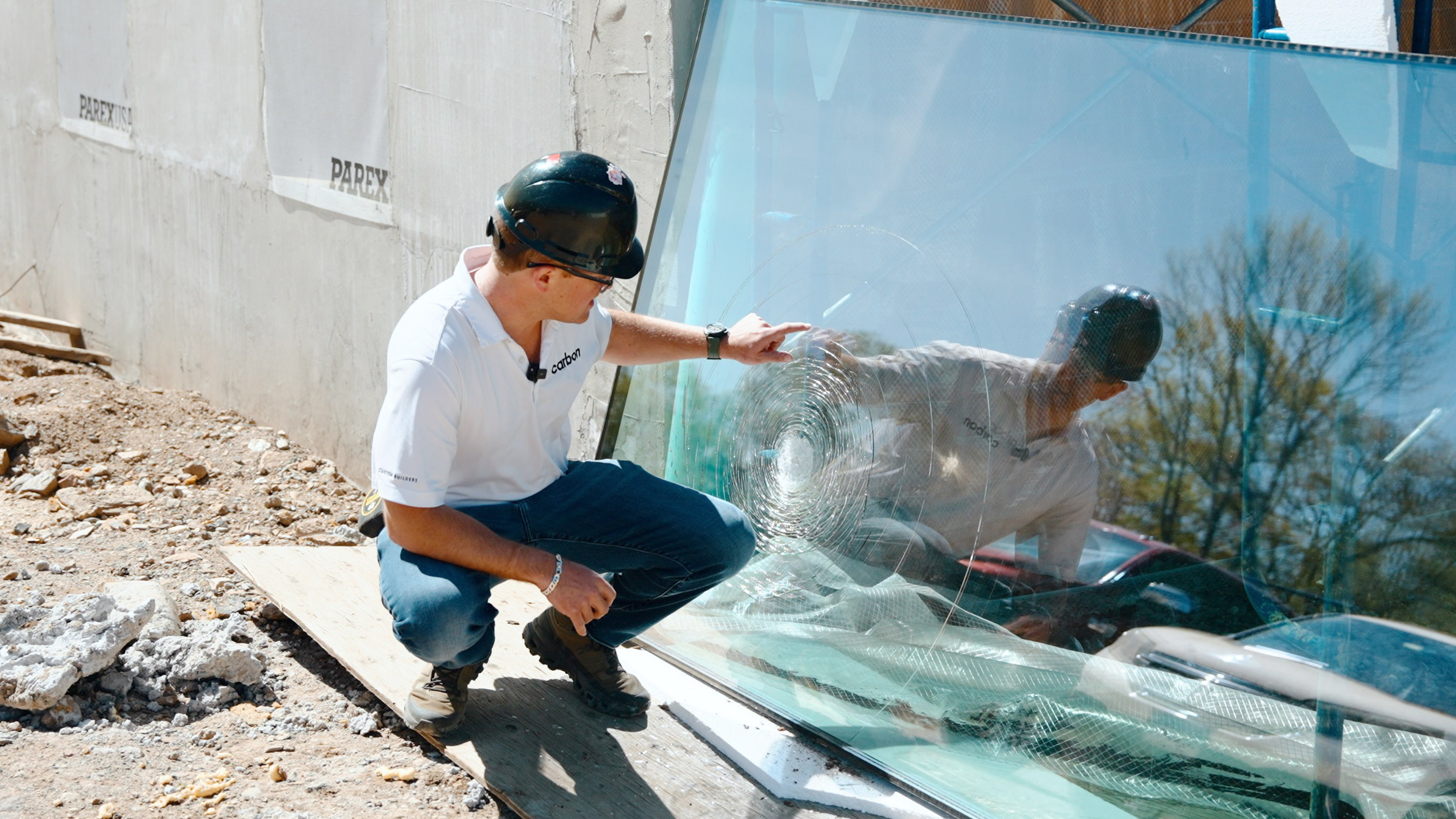
Impact-rated glazing is the standard for any serious storm-resilient build. These windows are tested to withstand a 9-pound 2x4 fired at 34 mph, then cycled through 9,000 pressure fluctuations to simulate sustained wind loads. They don't shatter under impact. The laminated inner layer holds even when the outer glass cracks. This isn't just about protecting glass. It's about maintaining envelope integrity: the moment a window fails, internal pressure spikes and roof uplift forces can increase by 30% or more.
At Carbon, our approach to unbreakable glazing systems goes further than standard impact ratings. We test every window specification rigorously before it goes into a build, because glazing is one of the most critical decisions in any coastal or storm-exposed project.
Waterproofing operates on the same principle: redundancy. Where most builders apply a single layer, our standard is a three-part system: a bituminous membrane, a protection board, and a dimple board that creates a drainage air gap. This multi-layered approach has been field-tested in extreme flooding conditions and proven watertight. In flood-prone areas, these details aren't optional. They're what separates a home that needs gutting from one that needs a clean.
Does Building Hurricane-Resistant Actually Save You Money?
Over the lifetime of the home, yes, by a significant margin. The upfront costs of ICF, impact glazing, and engineered roofing are real, but they're offset quickly through insurance savings, reduced repair costs, and the growing impossibility of finding affordable coverage in coastal markets built with conventional construction.
The U.S. home insurance market is in crisis in hurricane-exposed states. The average cost of a homeowner's policy nationally has risen 30 to 40% over the last five years, with far steeper increases in high-risk states. Florida's average annual premium now approaches $8,500, more than double the national average. US home insurance premiums are set to rise for a fifth consecutive year in 2026. Private carriers are withdrawing from coastal markets. Homeowners are left with fewer options and higher deductibles.
Homes built with storm-resistant features, including ICF walls, hip roofs, impact glazing, and elevated foundations, qualify for meaningful premium reductions in most states. A hip roof alone can save $300 to $900 annually in South Florida. ICF construction, with its proven resistance to wind and debris, reduces the claims risk that drives premiums upward. And if a storm does strike, the difference between a $20,000 repair and a $400,000 rebuild isn't abstract. It's determined by the decisions made at design stage.
The financial case for building right is now clearer than it's ever been.
What to Look for in a Builder
Not all custom builders approach storm resilience the same way. The right builder will design for it from day one, not bolt on storm features as afterthoughts or value-engineer them out under budget pressure.
The questions worth asking: Do they build with ICF as standard, or only on request? Do they test their glazing and waterproofing systems rigorously before specifying them? Do they design a continuous load path from foundation to roof, or leave that to a structural engineer after the fact?
At Carbon, resilience isn't an optional upgrade. It's foundational to our obsession with testing and to how we manage every detail of each build. We use ICF for walls and foundations across all our projects. We specify impact-rated glazing. We design roofs for the wind loads a home will actually face. And we don't sign off on a build until every system has been tested, not just inspected.
If you're planning a home in a hurricane-exposed location and want to understand what building for genuine storm resilience looks like in practice, we'd love to start that conversation. Book a consultation with the Carbon team and let's talk about what your project needs.
Key points, clarified
What wind speeds can a hurricane-resistant home withstand?
Homes built with ICF and engineered roofing can withstand 200 mph or more, compared to 130 to 150 mph for standard wood-frame construction. Real-world examples show these homes can remain intact under extreme storm conditions.
Is ICF construction more expensive than traditional building?
ICF typically adds 3 to 5% to upfront structural costs, often offset over time through lower energy use, reduced maintenance, and improved insurance outcomes. In storm-prone areas, avoided damage is a significant factor.
Does a hurricane-resistant home look different from a standard home?
No. ICF and impact-rated systems support a full range of architectural styles, with no visible difference once complete. The performance is structural, not aesthetic.
What's the most common way homes fail during hurricanes?
Failure typically occurs at the roof-to-wall connection, where wind uplift can separate the roof if not properly engineered. Once breached, pressure and water intrusion can quickly compromise the structure.
Can an existing home be made more hurricane-resistant?
Upgrades can improve performance, but they do not resolve underlying structural limits. Full resilience can only be achieved through new construction.


Interested in building a home that performs as well as it looks? Get in touch with the Carbon team to start the conversation about your project.