
As extreme weather intensifies, we’re building strong and sustainable sanctuaries that will keep you safe
TL;DR: Extreme weather events are increasing in frequency and cost, and most existing homes weren't built to handle what's coming. At Carbon, resilience isn't a premium option or an add-on. It's built into the structure of every home we create, from the materials we choose to the systems we specify to the way we test every detail before a project is complete. Here's how we think about building for a changing climate, and why it matters more now than ever.
Most homes were not built for the weather they now face. The average US home is 40 years old, designed to codes that predate the conditions of the current decade and built with materials that were never tested against what a category 5 hurricane, a multi-week wildfire, or a 500-year flood can actually do to a structure.
The numbers reflect this. In 2024, the United States experienced 27 weather and climate events that each caused more than $1 billion in losses, with a combined total of $182.7 billion in damage. The three years from 2023 to 2025 are the three highest years on record for billion-dollar disasters, with the average time between such events shrinking from 82 days in the 1980s to just 16 days over the past decade. In 2025, that interval fell to 10 days.
This isn't a future risk. It's a present one. And for our clients building homes in coastal regions like South Florida and the Hamptons, or across a Northeast increasingly exposed to extreme conditions, it shapes every decision we make from the moment a project begins.
What Does Designing for Resilience Actually Mean?
Resilience in construction means building a home that can withstand whatever the climate throws at it, not just today, but decades from now. It means choosing structural systems, materials, and detailing that don't just pass code, but are genuinely engineered to perform under pressure.
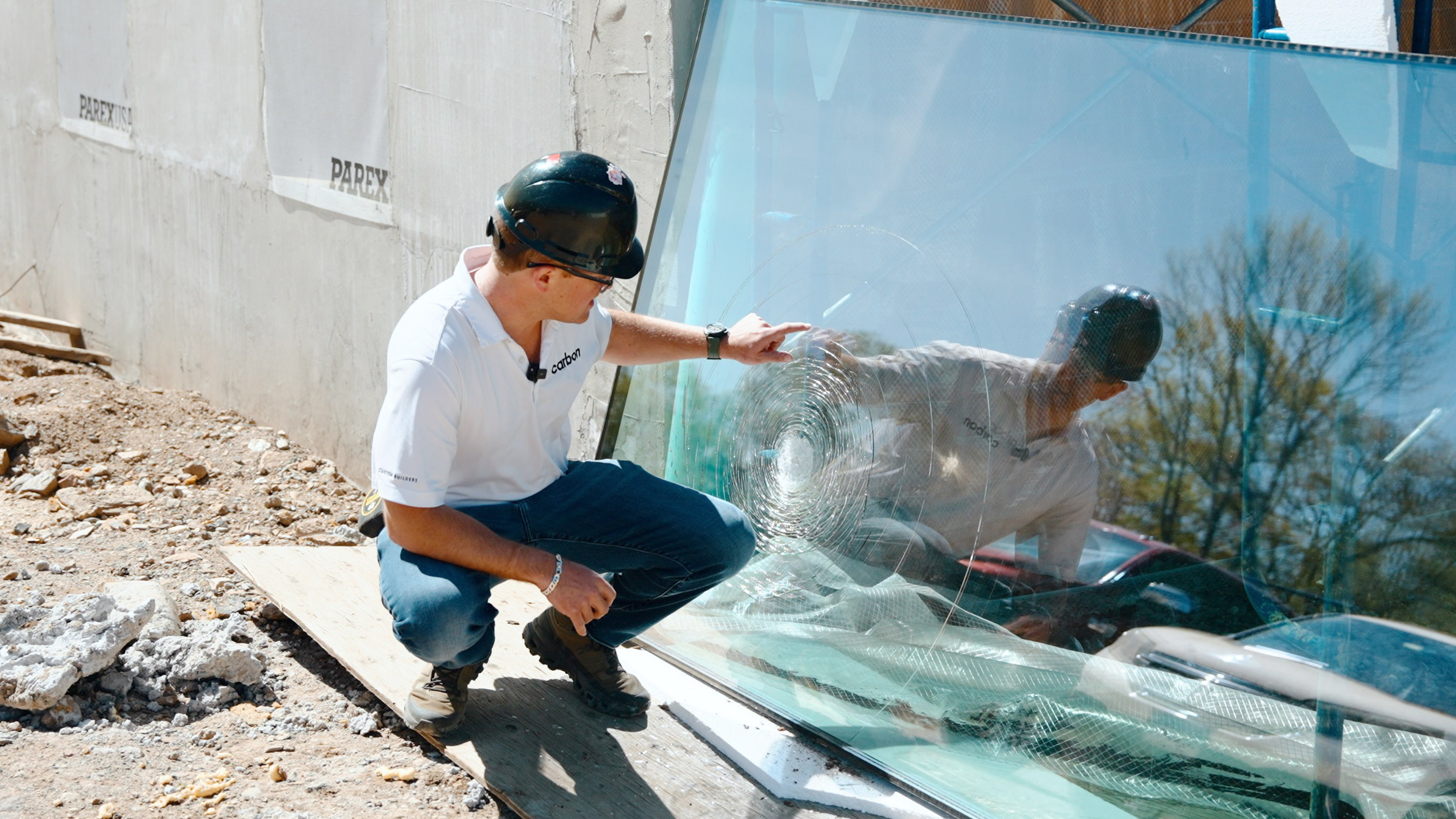
At Carbon, it means our ICF and steel framing systems, triple-pane glazing, multi-layer waterproofing, and rigorous testing protocols aren't optional enhancements. They're the foundation of how we build. Our approach doesn't shift with geography. Whether we're working on a property in the Hudson Valley or on the Florida coast, performance and longevity are built in from the start.
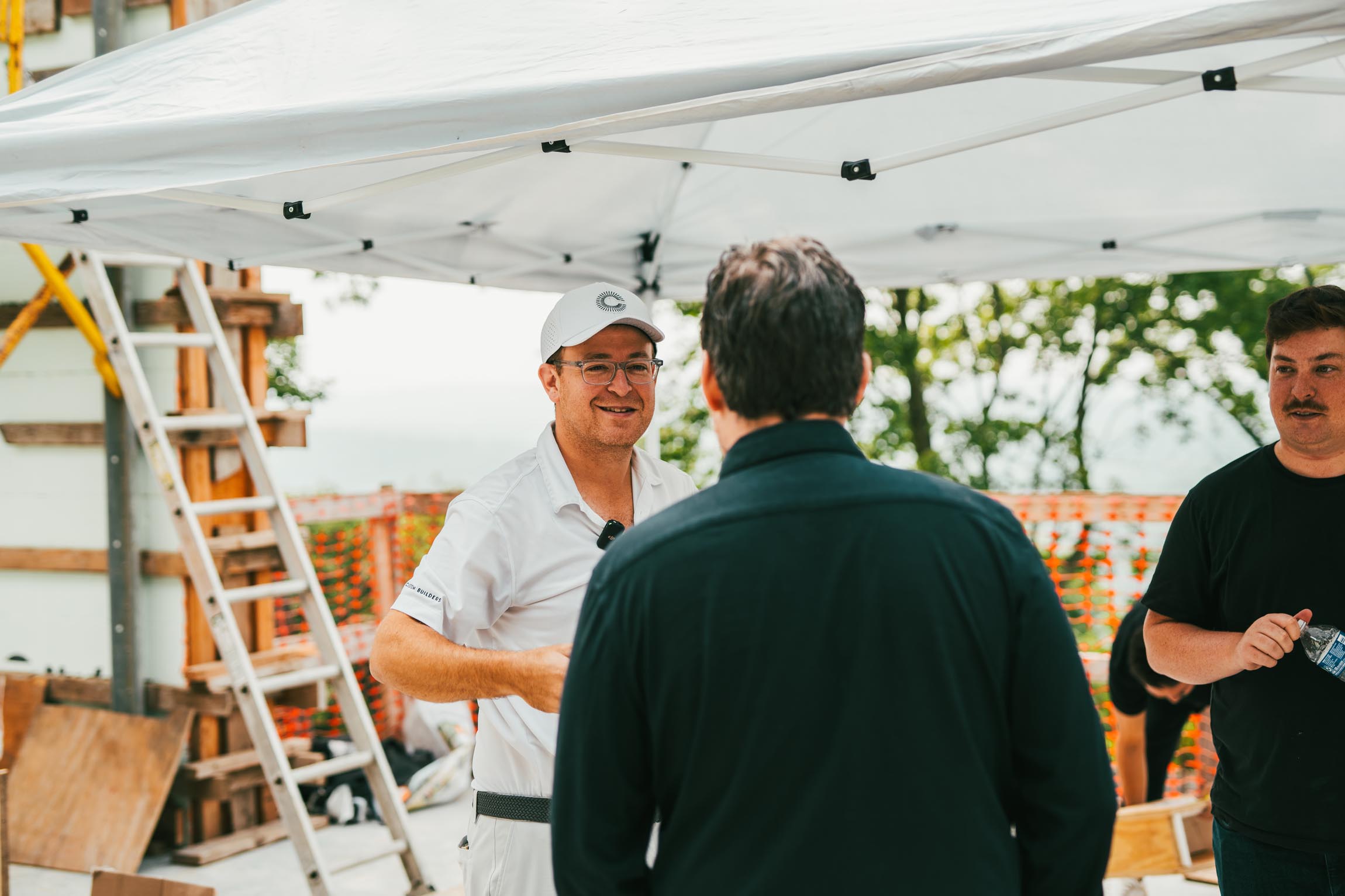
"It's not just about structural strength," says Founder and CEO Sam Fertik. "It's about peace of mind. Knowing your home is built to protect you and your family, no matter what's happening outside. That's an incredible feeling."
Why ICF and Steel Change What's Possible
The materials at the core of a Carbon home aren't chosen for aesthetics. They're chosen because they perform.
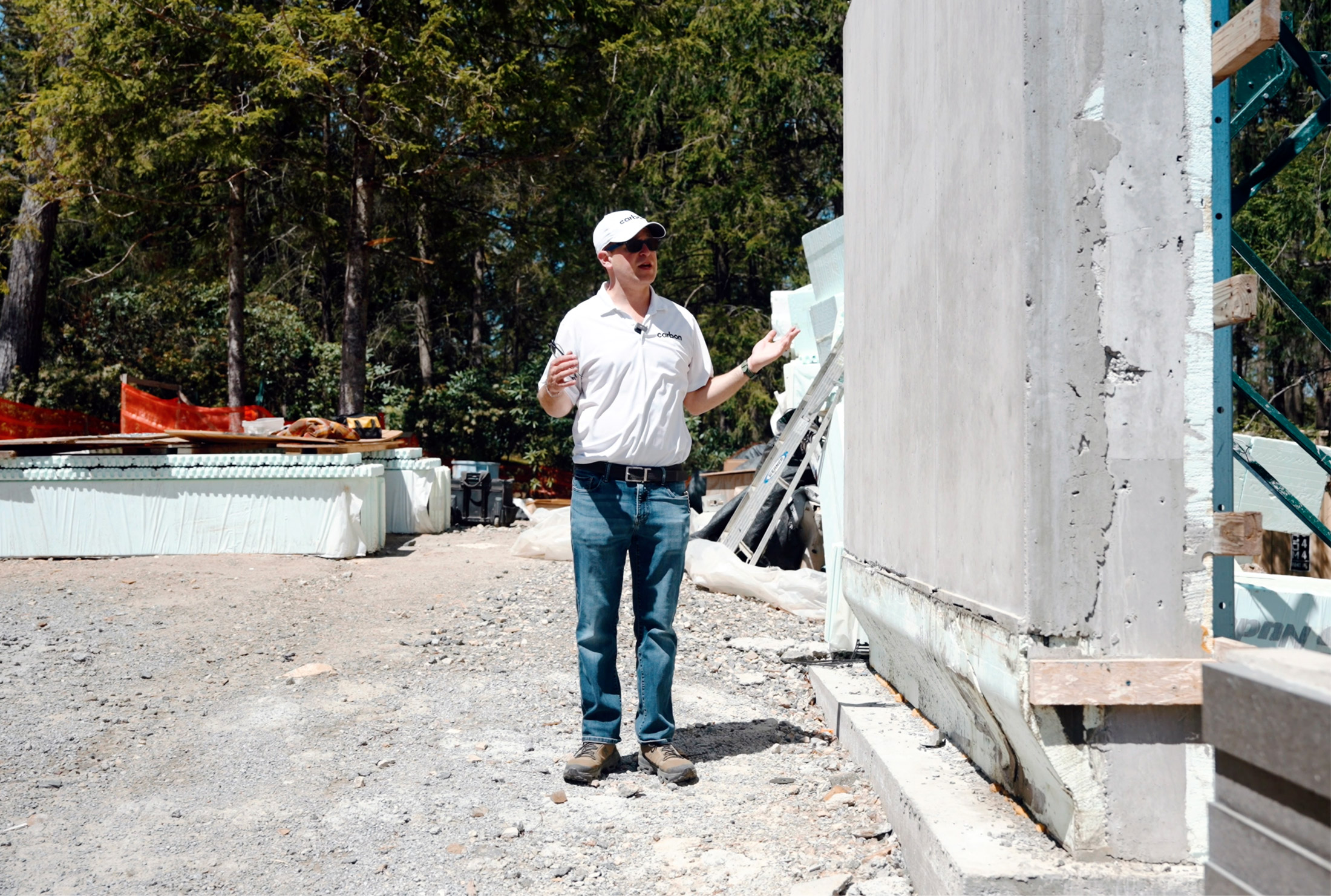
Insulated Concrete Form (ICF) walls can withstand wind speeds of up to 250 mph and carry a fire resistance rating of up to four hours, compared to just 45 minutes for standard wood framing. ICF walls are up to ten times stronger than timber-framed structures, resistant to flooding, mold, rot, and pest infiltration, and create an airtight envelope that performs consistently year after year. In many cases, our ICF and steel systems can be built as quickly as, or faster than, a comparable stick-built home, while delivering significantly superior safety, durability, and energy performance.
The proof is in what these structures withstand. When Hurricane Michael made landfall at Mexico Beach, Florida in 2018, virtually every conventional home in the area was destroyed. One home built with ICF, using the same Nudura system we specify at Carbon, was left standing. That's not a coincidence. It's the consequence of a material choice made before the storm arrived.
For clients building weather-resilient luxury homes in areas where that kind of test is a realistic possibility, those material choices are the most important decisions made in the entire project.
The Carbon Approach to Testing
Resilience doesn't come from specification alone. It comes from testing: obsessively, repeatedly, and to standards that exceed what codes require.
Every element of every Carbon build is tested and retested against our own benchmarks and the realities of a changing climate. Our waterproofing approach is a direct example of this. Where most builders apply a single layer of waterproofing to an exterior wall, we use a three-part system: a painted-on bituminous membrane, a one-inch DPI protection board, and a dimple board that creates an air gap for drainage and ventilation. This system has been field-tested in extreme wet conditions and proven completely watertight.
In flood-prone regions like South Florida, that level of redundancy isn't cautious. It's essential. A single-layer waterproofing failure in a coastal storm isn't a nuisance. It's a structural event. Our approach is designed to make that outcome essentially impossible.
This same obsession with testing runs through every system in a Carbon home, from the structural frame to the mechanical specification to the envelope detailing. We test, then test again, and test again after that, because we believe the only benchmark that matters is real-world performance.
Resilience and the Insurance Reality
Building to a higher standard isn't just about protection. It increasingly has direct financial consequences for homeowners.
Homeowners insurance premiums rose 27% nationally between 2021 and 2024. In high-risk states, increases have been far steeper. Some major insurers have withdrawn entirely from Florida and California, leaving homeowners reliant on state-backed plans of last resort. The underlying reason is clear: the existing housing stock wasn't built for current conditions, and insurers are pricing that risk accordingly.
Homes built with ICF and steel present a fundamentally different risk profile. ICF walls resist the wind loads, fire spread, and moisture intrusion that drive the majority of climate-related insurance claims. The National Institute of Building Sciences has found that for every dollar invested in hazard mitigation, there are $13 in savings in future costs. Building resilience in from the start isn't just structurally wise. Over time, it's financially wise too.
What Resilience Looks Like in Practice
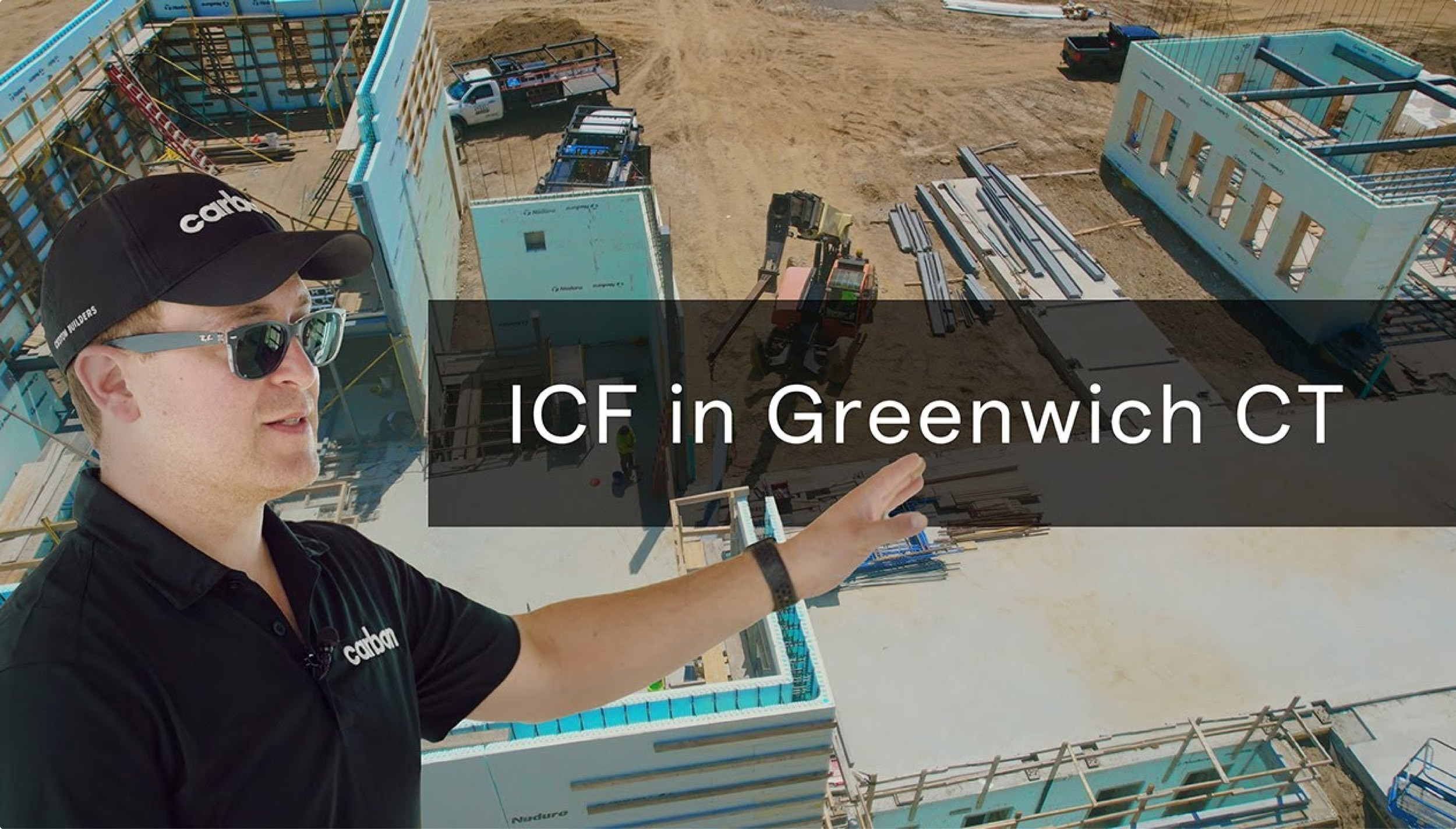
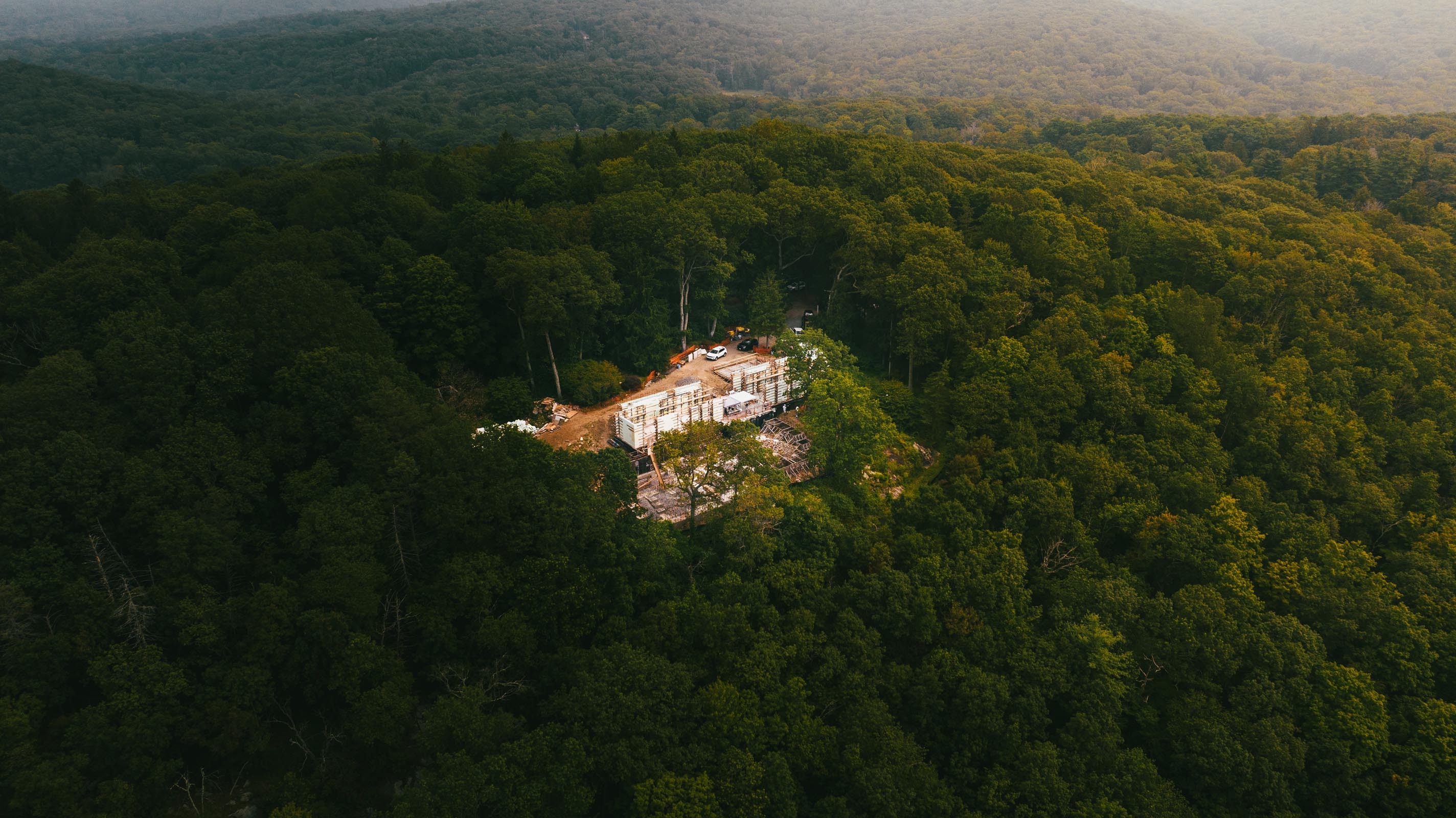
Carbon's Greenwich project is an example of how resilience thinking shapes every aspect of a build, not just the walls.
The approach starts at early design coordination, where structural performance, glazing strategy, envelope detailing, and waterproofing are considered together rather than added sequentially. The result is a home where every system is designed to work in concert, with no weak points and no afterthoughts.
Resilience at this level doesn't mean a home looks fortified. It means a home looks exceptional, while the engineering beneath the surface ensures it can endure whatever the climate demands. Our clients in the Hamptons build in landscapes that are exposed to Atlantic storms, coastal flooding risk, and the kind of sustained weather pressure that tests every junction and every detail. Our approach is built around that reality from day one.
The Long View
As extreme weather continues to intensify, the question for anyone building a significant home is no longer whether resilience matters. It's whether they've built it in or left it to chance.
The homes Carbon builds across upstate New York, the Hudson Valley, South Florida, and the Hamptons are designed to perform not just today but in the decade ahead. That means structural systems engineered to exceed current codes, materials tested against real-world conditions, and an approach to detail that treats every element of the building envelope as a performance decision.
If you're planning a custom home and want to understand how we approach resilient construction, we'd love to get in touch and start the conversation.
Frequently Asked Questions
What makes a home resilient against extreme weather?
A truly resilient home is built with structural systems, materials, and detailing that are engineered to withstand hurricanes, wildfires, floods, and temperature extremes, not just pass minimum building codes. Key factors include the wall system (ICF and steel framing outperform timber significantly), waterproofing redundancy, glazing performance, and how well all systems are integrated from the design stage. ICF walls can withstand winds of up to 250 mph and carry a four-hour fire rating, compared to 45 minutes for standard wood framing.
Why is coastal construction more demanding than standard residential building?
Coastal environments combine salt air corrosion, high wind exposure, storm surge risk, humidity, and in many areas, the threat of direct hurricane impact. Each of these factors degrades conventional construction materials and detailing over time, often in ways that aren't visible until a weather event exposes the failure. ICF walls are hydrophobic and non-corrosive, steel framing doesn't rot or warp, and multi-layer waterproofing systems are designed for exactly these sustained conditions. Building to a coastal standard from the outset is substantially less expensive than retrofitting an existing home to meet those demands.
Are resilient homes more expensive to build?
ICF and steel construction typically adds around 3 to 5% to upfront build costs compared to a comparable wood-frame home. Those costs are offset over time through lower energy bills, reduced maintenance, and in many cases lower insurance premiums. The National Institute of Building Sciences has found that every dollar invested in hazard mitigation saves $13 in future costs. For clients building at Carbon's level, the long-term financial case for resilient construction is straightforward.
How do you test a home's resilience during construction?
At Carbon, every system is tested against real-world performance benchmarks, not just code compliance. Our three-layer waterproofing system, for example, was field-tested under extreme wet conditions before being adopted as standard across all our builds. Structural systems are verified throughout the build process, envelope detailing is reviewed at each stage, and mechanical systems are commissioned and tested before handover. The goal is to identify and address any performance gap before a client moves in, not after a storm reveals it.
What is the biggest mistake homeowners make when building in a disaster-prone area?
The most common mistake is treating resilience as an upgrade rather than a foundation. Homeowners focus on finishes, layout, and specification, and leave structural and material decisions to a builder's standard practice. In areas exposed to hurricanes, flooding, or wildfire, standard practice is rarely sufficient. The structural decisions made at the earliest stages of a project, including wall system, waterproofing strategy, glazing specification, and foundation approach, determine how a home performs in an extreme event. Those decisions are extremely difficult and costly to change later. At Carbon, they're made first.


Interested in building a home that performs as well as it looks? Get in touch with the Carbon team to start the conversation about your project.