

Founder and CEO Sam Fertik on the structural, environmental and experiential benefits of an ICF home
TL;DR: At Carbon, we build with Insulated Concrete Forms because they make homes that perform as well as they look. ICF walls deliver energy efficiency four times that of standard stick-built construction, structural strength proven against hurricanes and fires, near-total sound attenuation, and an indoor climate that stays serenely consistent year-round. Here's exactly why we chose ICF as the foundation of how we build, and why it matters for the home you're planning.
Most custom homes look exceptional. Far fewer actually perform exceptionally. When people start planning a luxury custom home, they spend hours on floor plans, finishes, and fixtures. Very few stop to ask what their walls are made of.
That's the question we ask first at Carbon. It's why we build primarily with Insulated Concrete Forms (ICF). It's a choice that shapes everything: how efficient your home is, how safe it is, how quiet it feels, and how comfortable it is to live in, day after day. It's not the easiest way to build. But it is, we believe, the best way to build.

What Is ICF and How Does It Actually Work?
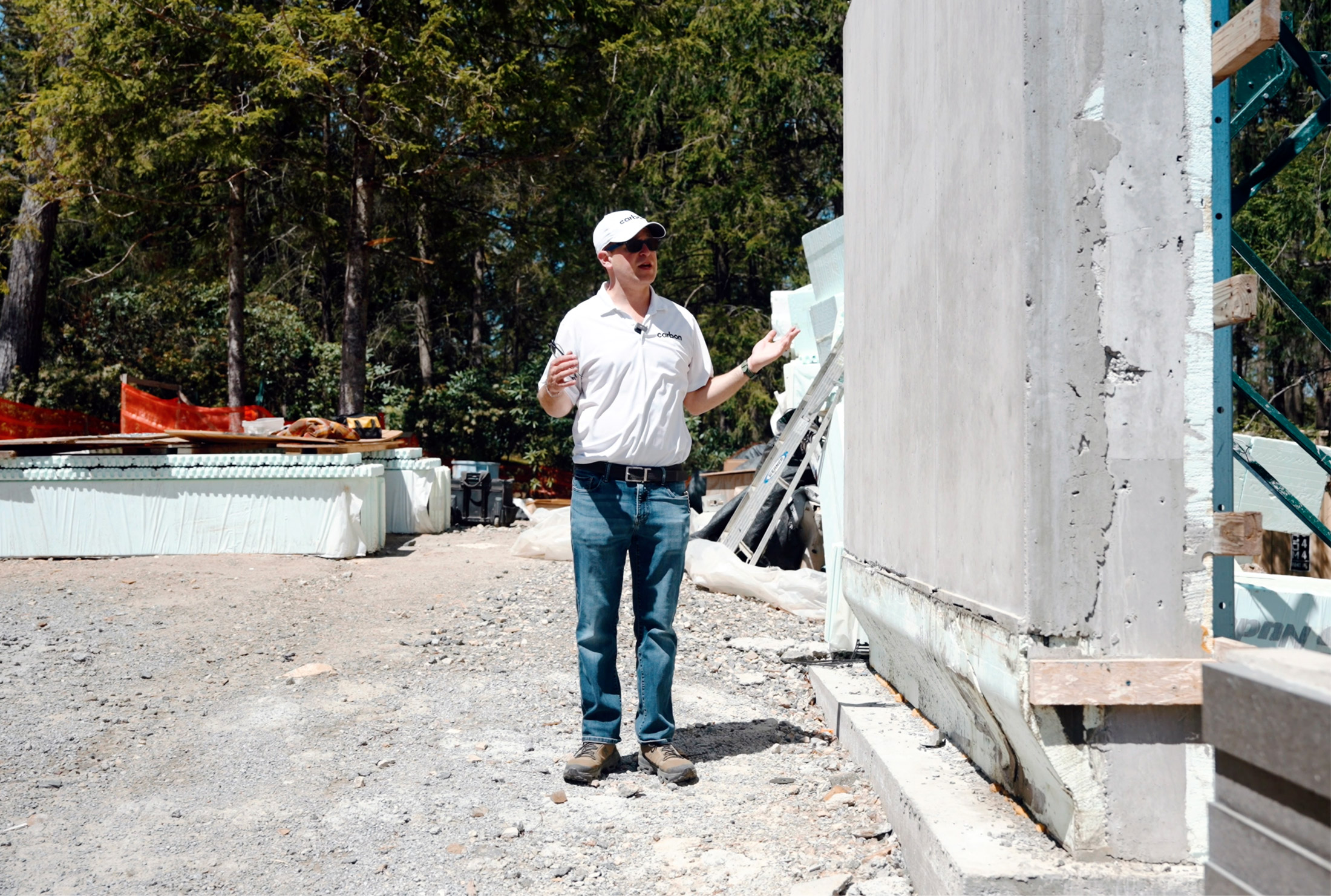
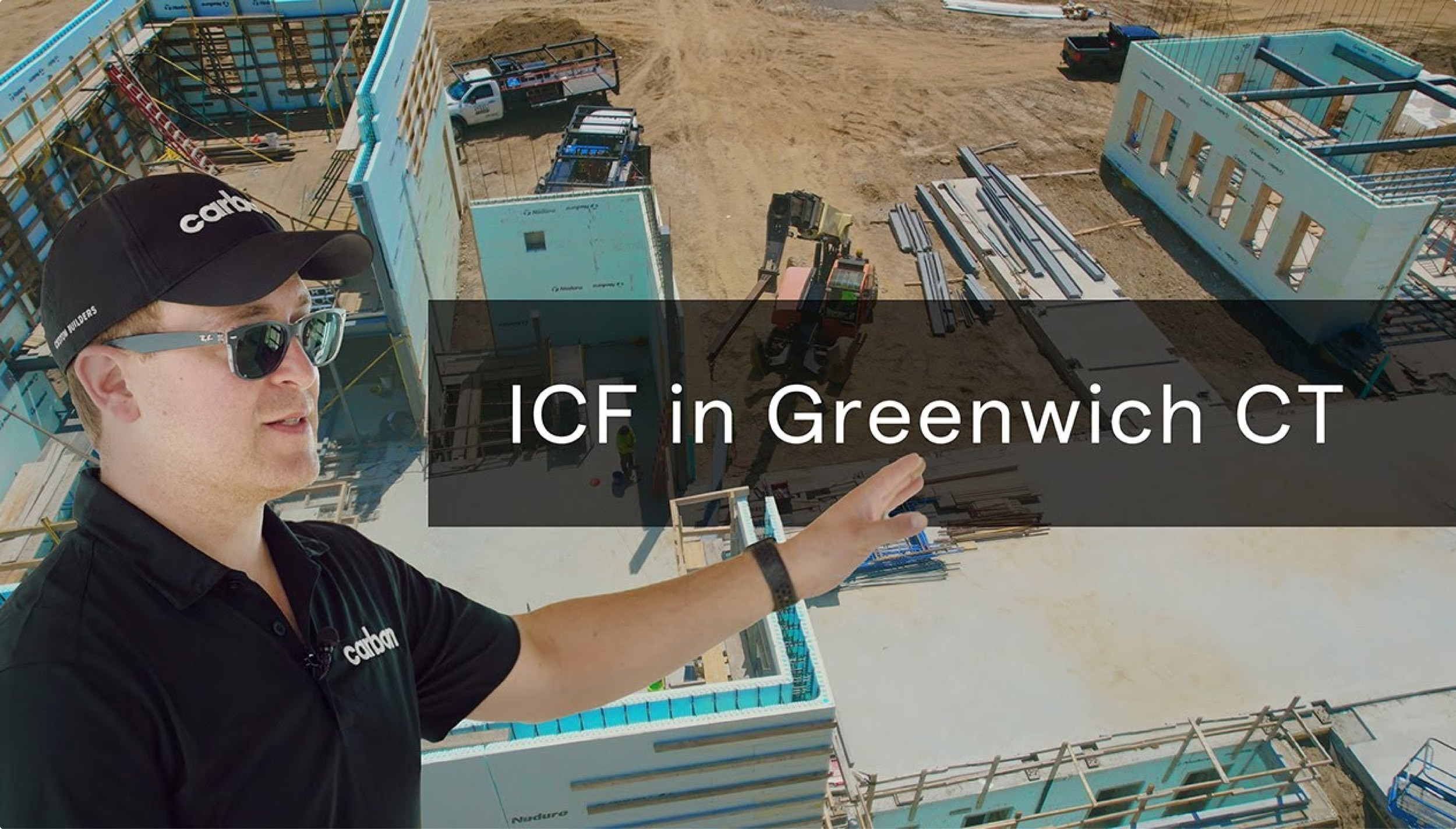
Insulated Concrete Forms are hollow foam blocks that stack together and are filled with steel-reinforced concrete, creating a single wall system that combines structure, insulation, and air barrier in one continuous step. The forms stay permanently in place, so your home ends up with a solid concrete core wrapped on both sides by rigid insulation, from the foundation to the roofline.
At Carbon, we use ICF for both foundations and above-grade walls. That means the entire shell of your home benefits from this system, not just the basement. Traditional stick-built construction places insulation batts between timber studs. It's a familiar method, but it creates gaps, thermal bridges, and air leaks that ICF simply doesn't have. Where wood framing relies on layers of separate components to do the job, ICF does it all at once and does it better.
Why Does ICF Make a Home So Much More Energy Efficient?
ICF homes typically use 30 to 50% less energy to heat and cool than comparable wood-frame homes. That improvement comes from three factors working together: continuous insulation with no thermal bridging, the thermal mass of the concrete core, and an airtight building envelope with near-zero air infiltration.
Standard wood-frame walls have an effective R-value of around R-9 to R-15 once you account for studs and gaps. ICF walls start at R-23 to R-25 from the foam alone. The concrete core then adds thermal mass, which absorbs and stores heat energy and releases it slowly, buffering the home against outdoor temperature swings. It can take days for a change in outdoor temperature to work its way through an ICF wall.
A study by CLEB Laboratories found that an ICF wall delivered 58% greater R-value performance and 43% energy savings compared to a wood-frame wall. That's not a marginal gain. It's a fundamentally different level of performance. And because ICF creates an airtight building envelope, the energy you do use isn't bleeding out through gaps in the walls.
Our own home, Carbon Home Zero in Pound Ridge, is the clearest proof we have. Sam's ICF walls are rated at R-70, more than four times the efficiency of a standard stick-built home. Paired with R-8 triple-pane European windows and a geothermal HVAC system with radiant floors, the result is a home that stays naturally comfortable in every season. The geothermal setup paid for itself within two years through available tax credits. That's a real, recurring saving every year for the life of the home.

The Carbon Home Zero Story
When Sam built his own family home in Pound Ridge, it was always going to be more than a personal project. It was a chance to prove what a Carbon home could actually be, at full scale.
The 11,750-square-foot home uses ICF for both the foundations and the walls. The concrete and steel structure delivers unparalleled strength and energy efficiency. The obsessive attention to every detail, from the footings to the finishes, creates the elevated lived experience that Carbon has become known for.
The ICF walls are R-70 rated. Half the exterior features triple-pane European glass. The geothermal HVAC system provides year-round comfort. Advanced air and water filtration systems keep the indoor environment clean and pure. Interior lime plaster helps sequester carbon and improves air quality. No VOC paints or toxic glues were used anywhere in the build.
The result is a home that's four times more energy-efficient than a standard stick-built equivalent, and one that feels as quiet, grounded, and serene as it looks. Carbon Home Zero has since been featured in Forbes, Archello, and Builder Online. It's the kind of home ICF makes possible when you build without compromise.
How Does ICF Make a Home Stronger and More Resilient?
An ICF wall is up to ten times stronger than a wood-framed structure. Its core is solid, steel-reinforced concrete, which gives it a level of structural integrity that no timber-framed wall can match. For homes in the Hudson Valley, the Hamptons, and the broader Northeast, that strength matters more than most people initially realise.
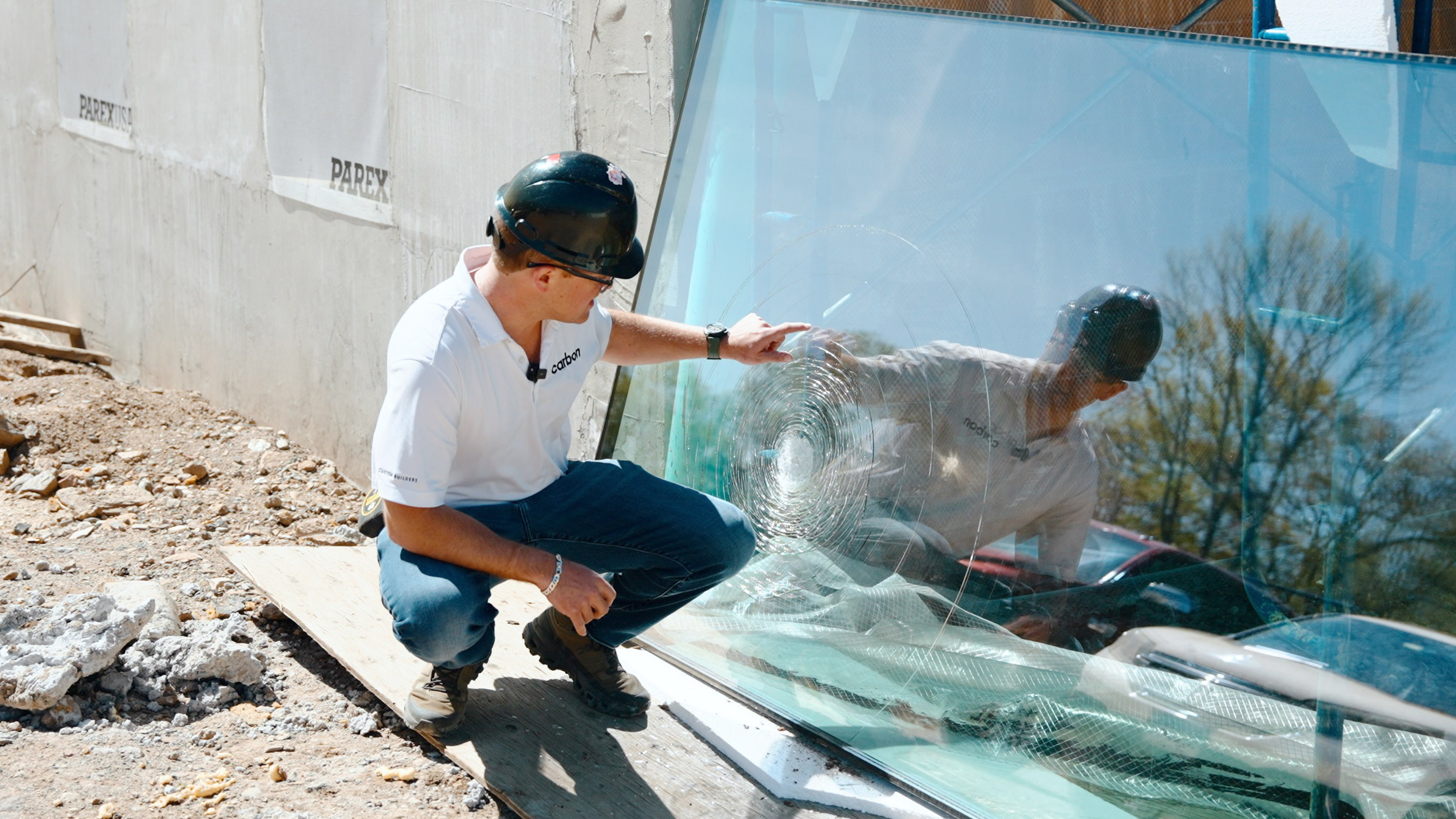
ICF walls can withstand wind speeds of up to 250 mph, far exceeding what a conventional home can handle. When Hurricane Michael devastated Mexico Beach, Florida in 2018, one home was left standing while nearly everything around it was destroyed. It was built with ICF, using the same Nudura system we use at Carbon.
ICF walls also carry a fire resistance rating of up to four hours, compared to just 45 minutes for traditional wood framing. That is the difference between a home that survives and one that doesn't. Concrete is also resistant to flooding, mold, rot, and insects. There is no wood to warp, swell, or attract termites.
This resilience also has a long-term financial dimension. ICF homes typically last 75 to 100 years with minimal maintenance, and they often qualify for reduced insurance costs because of their proven performance against extreme weather. When you're investing at this level, you want to know the home will hold its value and its structure for generations.

Why Does an ICF Home Feel Different to Live In?
This is the part that's hardest to put in a brochure, but it's the part our clients talk about most. Everyone who spends time in a Carbon ICF home tells us the same thing: it just feels different.
The first thing people notice is the quiet. ICF walls with a six-inch concrete core achieve an STC (Sound Transmission Class) rating of around 52, compared to around 38 for standard insulated wood-frame walls. Only about one-quarter to one-eighth as much sound penetrates an ICF wall compared to wood frame. The wind, the road, the world outside, it all stays outside. More than 60% of ICF homeowners surveyed by ICF Builder Magazine specifically mention the quietness of their home as one of the standout benefits.
Then there's the sense of solidity. Thick walls have a calming, cocooning quality that's noticeable the moment you walk in. It's not something you can achieve with decor or finishes. It comes from the mass of the walls themselves.
And then there's the temperature. Because ICF walls have such high thermal mass, indoor temperatures shift slowly and gradually. There are no cold spots near exterior walls on a January morning, no overheated corridors in August. The home maintains its own equilibrium, and you feel it in the way every room settles around you. It's what we call a healthier living environment, one that supports your wellbeing, not just your lifestyle.
Is Building with ICF Better for the Environment?
ICF construction is inherently more sustainable than stick-built, but at Carbon, we go further.
Concrete often faces scrutiny for its carbon footprint, and it's worth being clear: cement (the binding agent in concrete) is the main source of CO2 in the mix, not concrete itself. We use a recycled glass additive that replaces up to 50% of the cement content. It maintains, and in some cases improves, structural strength, while meaningfully lowering the emissions associated with the pour.
We also use ICF for foundations, which lets us build thinner, higher-performing walls above grade. A 6-inch wall where a 10-inch wall would otherwise be needed means up to 40% less concrete used across the build. That translates directly into a smaller environmental footprint.
US building codes tighten on energy efficiency requirements with every code cycle. A Carbon ICF home already exceeds today's standards and is well prepared for where codes are heading. That future-proofing is built into the structure itself, not added on afterwards.
The Choice Behind Every Carbon Home
We build with ICF because it makes every part of a home better. More efficient, more resilient, quieter, healthier, and more sustainable than conventional construction. And when you experience it, when you stand inside a completed Carbon home and feel the stillness of those walls, the reasoning becomes obvious.
The homes we build across upstate New York, the Hudson Valley, and the Hamptons are built to last. Not just structurally, though ICF makes that possible too. They're built to be exceptional homes to live in for decades to come. That's the standard we hold ourselves to, and ICF is one of the foundations that makes it achievable.
If you're planning a custom home and want to understand what building with ICF could mean for your project, we'd love to get in touch and start the conversation.
Frequently Asked Questions
How much more energy efficient is an ICF home compared to a standard build?
ICF homes typically use 30 to 50% less energy to heat and cool than comparable wood-frame homes. The improvement comes from three factors: continuous rigid insulation starting at R-23, the thermal mass of the concrete core, and an airtight building envelope that prevents heat loss through air infiltration. Carbon's own Carbon Home Zero achieves R-70 walls, more than four times the thermal efficiency of a standard stick-built home.
Does ICF construction limit what my home can look like architecturally?
Not at all. ICF is compatible with virtually any exterior finish, including timber cladding, stone, stucco, and brick. It supports contemporary architectural features like tall walls, large structural openings, and dramatic glazing. The homes we build at Carbon range from sweeping modern estates to grounded natural retreats, and ICF has never limited our ability to deliver the design our clients and architects envision.
What makes ICF particularly well-suited to Hudson Valley or Hamptons builds?
Both regions bring real climatic demands: cold winters, humid summers, and for coastal properties, exposure to extreme weather. ICF handles seasonal temperature swings far better than wood framing because of its thermal mass and continuous insulation. Its structural strength, with walls rated to withstand winds of up to 250 mph, makes it a sound choice for hurricane-exposed areas. Its resistance to moisture, mold, and rot also makes it ideal for wooded and coastal settings.
How does ICF reduce a home's environmental impact?
ICF reduces a home's operational carbon footprint significantly through energy savings over its lifetime. At Carbon, we also address embodied carbon by using a recycled glass additive that replaces up to 50% of the cement in our mix. Thinner ICF walls mean we use less concrete overall. ICF foam panels are made in part from recycled materials, and the long lifespan of an ICF structure (75 to 100 years) means fewer resources spent on repairs and rebuilding over time.
Is ICF construction more expensive than standard stick-built?
ICF typically adds around 3 to 5% to upfront construction costs compared to a comparable wood-frame home. Those costs are offset over time through significantly lower energy bills, reduced maintenance requirements, and in some cases lower insurance premiums. For clients building at a level where long-term performance and enduring quality matter as much as the initial cost, ICF consistently represents the better investment.


Interested in building a home that performs as well as it looks? Get in touch with the Carbon team to start the conversation about your project.